
What Is ADHD?
"ADHD is less about “not knowing what to do” and more about “struggling to do what you know.”
Attention-Deficit/Hyperactivity Disorder (ADHD) is a neurodevelopmental condition that affects how the brain manages focus, organization, emotion, and self-regulation. While it is often identified in childhood, ADHD frequently continues into adulthood—though it may look very different over time.
ADHD in Adults
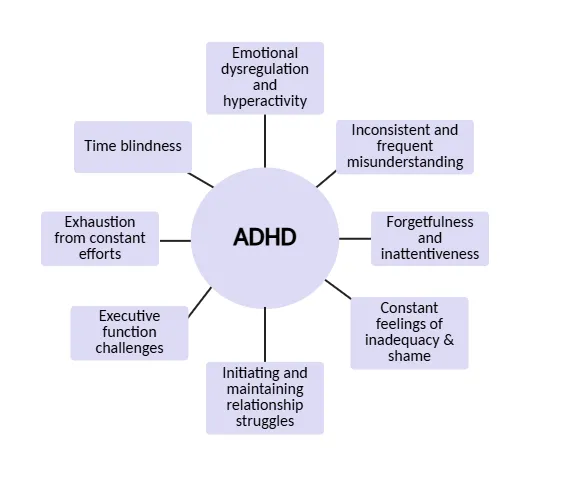
Adult ADHD often presents in more subtle and internalized ways. Rather than overt hyperactivity, adults may experience a persistent sense of restlessness, racing thoughts, or difficulty relaxing. Common symptoms include:
- Emotional Dysregulation and Hyperactivity – intense emotions, impulsive reactions, or difficulty managing frustration.
- Forgetfulness and Inattentiveness – losing track of time, misplacing items, or struggling to stay organized.
- Inconsistent and Frequent Misunderstanding – challenges interpreting tone, missing details, or feeling “out of sync” in communication.
- Masking Struggles – constant efforts to appear “together,” which often lead to emotional exhaustion.
- Time Blindness – difficulty perceiving the passage of time, leading to procrastination or missed deadlines.
- Constant Feelings of Inadequacy and Shame – stemming from years of feeling “different” or not meeting expectations.
- Relationship Difficulties – challenges initiating or maintaining relationships due to inconsistency or emotional intensity.
- Exhaustion from Constant Efforts – mental fatigue from overcompensating and self-monitoring throughout the day.
Adults with ADHD are often high-achieving, creative, and driven—yet internally overwhelmed by the mental effort required to function in a neurotypical world. Understanding and addressing these patterns can lead to profound relief and growth.
ADHD in Children
Children with ADHD often display more visible symptoms such as hyperactivity, impulsivity, or distractibility. They may struggle to sit still, follow directions, or complete school tasks. In children, the focus of treatment is typically on behavioral support, structure, and skill-building, while in adults, therapy often centers on self-awareness, emotional regulation, and executive functioning skills.